Recovery After Cervical & Lumbar Spine Injections
What to Expect After Your Injection
Spine injections can be used for several different reasons.
Some injections are designed to reduce inflammation and pain, while others are performed primarily to identify where your pain is coming from.
Because of this, what you should expect after your injection depends on the procedure you had.
Common cervical and lumbar spine procedures include:
Epidural steroid injections
Selective nerve root blocks
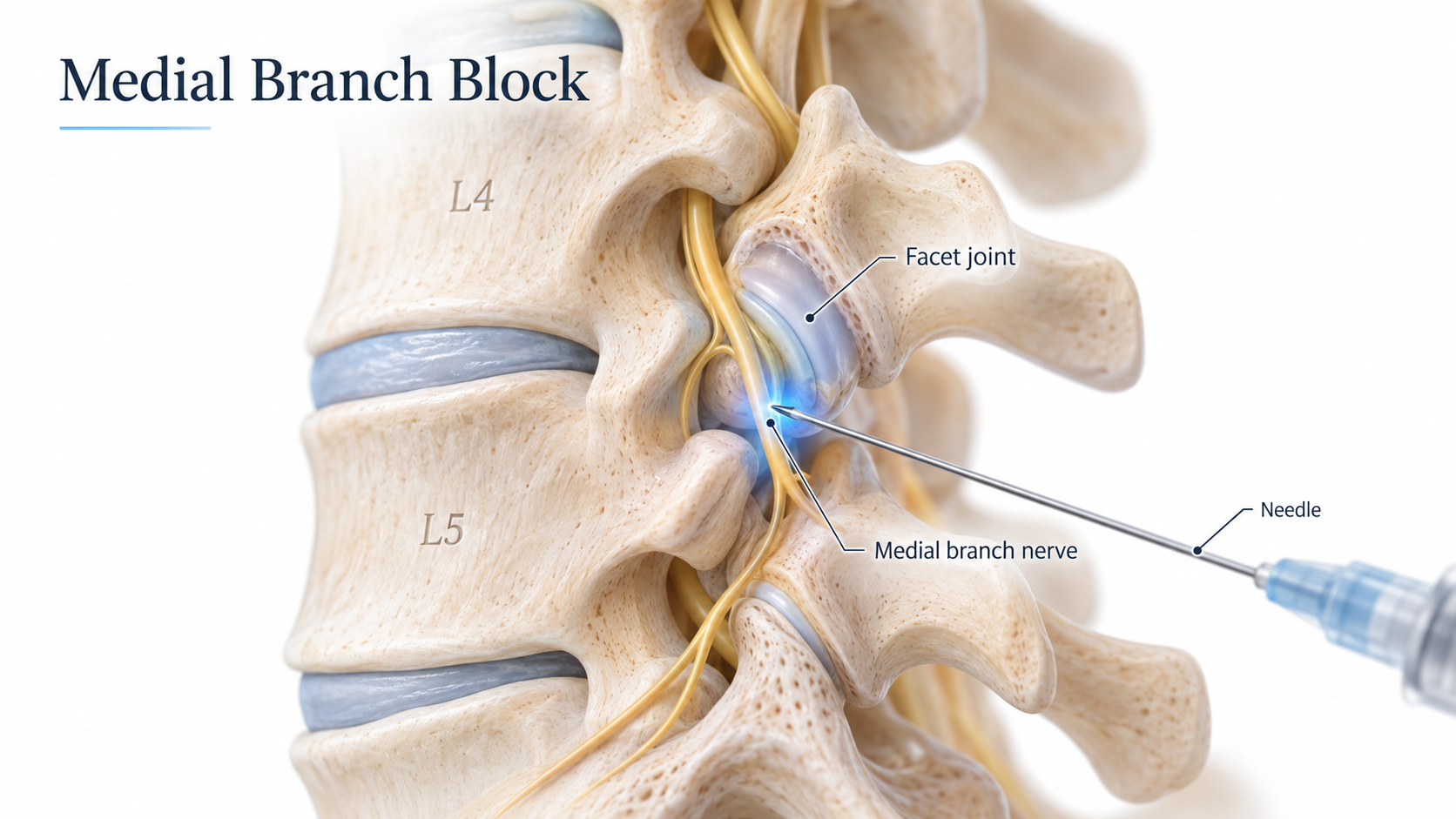
Medial branch blocks
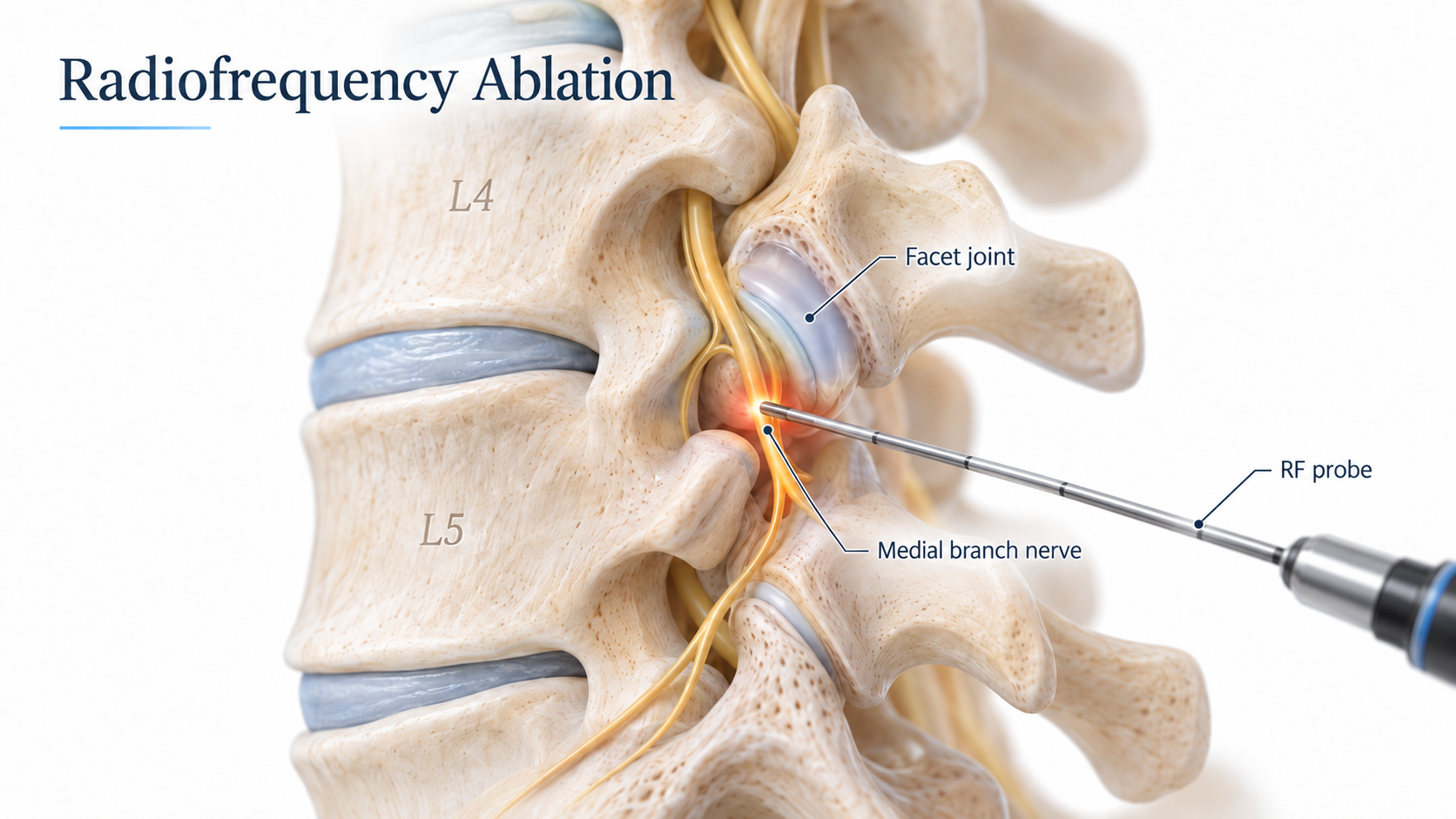
Radiofrequency ablation (RFA)
Understanding which procedure you had—and what we are trying to accomplish—is an important part of evaluating whether it worked.
After Your Injection
Most patients can walk and perform light everyday activities shortly after their procedure.
You may experience some temporary soreness around the injection site. Occasionally, your usual neck, back, arm or leg symptoms may temporarily increase before settling down.
Take it relatively easy for the remainder of the day.
Unless you have been given different instructions, you can generally begin returning to your normal daily activities as you feel comfortable.
Your individual instructions may vary depending on the procedure, medications used and whether you received sedation.
Epidural Steroid Injections
What Is the Goal?
A cervical or lumbar epidural steroid injection is generally used to decrease inflammation around an irritated or compressed nerve.
These injections may be used for symptoms such as:
Cervical radiculopathy
Lumbar radiculopathy
Sciatica
Arm or leg pain caused by nerve irritation
Symptoms associated with spinal stenosis or a disc problem
The goal is to reduce inflammation and pain so that you can move more comfortably and participate more effectively in your recovery.
When Should an Epidural Start Working?
You may notice some temporary improvement immediately after the procedure from the local anesthetic used during the injection.
That immediate relief is not necessarily the effect of the steroid.
The steroid generally takes longer to work.
Some patients begin noticing improvement within several days, while others may require more time before determining how much benefit they received.
Your pain may also temporarily increase or fluctuate during the first few days.
Don't judge the final result of an epidural injection based solely on how you feel immediately after the procedure.
How Long Will an Epidural Last?
This varies significantly from patient to patient.
Some patients experience substantial and prolonged improvement.
Others receive temporary relief.
And some patients receive little or no meaningful benefit.
The response itself can also provide useful information about how much of your pain is coming from the area being treated.
Selective Nerve Root Blocks
A selective nerve root block targets a specific spinal nerve.
It can sometimes serve both a diagnostic and therapeutic purpose.
For example, if imaging shows abnormalities at several levels, temporarily improving your symptoms after targeting one particular nerve can help us better understand which level is responsible for your pain.
Pay attention to:
How much your pain improves
Which symptoms improve
How quickly the improvement occurs
How long the improvement lasts
This information can be extremely helpful when planning your next step.
Medial Branch Blocks
This Is Primarily a Diagnostic Test
A medial branch block is different from an epidural steroid injection.
Its primary purpose is generally diagnostic.
The medial branch nerves carry pain signals from the small facet joints in the spine.
By temporarily numbing these nerves, we can determine whether the facet joints are likely contributing to your neck or back pain.
The Most Important Question Is:
“How much better was my pain while the medication was working?”
How Long Does a Medial Branch Block Last?
The relief from a diagnostic medial branch block is intentionally temporary.
It may only last approximately an hour or so.
That does not mean the injection failed.
In fact, the short duration is expected because the purpose of the procedure is to temporarily numb the targeted nerves and see how your pain responds.
What matters most is how much relief you experienced during that period.
If you normally have pain while standing, walking, bending or performing another activity, pay attention to how that activity feels while the block is working.
Track Your Response
After a diagnostic medial branch block, I want you to pay attention to your pain during the period immediately following the procedure.
Consider recording:
Pain before the injection: ___ / 10
Best pain level afterward: ___ / 10
Estimated percentage of relief: ___ %
How long did the relief last? __________
What could you do more comfortably? __________
This information is much more useful than simply saying:
“It helped.”
Radiofrequency Ablation (RFA)
What Is an Ablation?
If diagnostic medial branch blocks indicate that the facet joints are an important source of your pain, radiofrequency ablation may be considered.
Instead of temporarily numbing the medial branch nerves, radiofrequency energy is used to disrupt their ability to transmit pain signals.
The goal is to provide longer-lasting pain relief.
Ablation Does Not Always Work Immediately
This is one of the most important things to understand after radiofrequency ablation.
Do not expect the full benefit immediately.
The treated area may actually feel sore or irritated after the procedure.
The nerves need time to respond to the treatment.
It may take approximately 4–6 weeks before you experience the full benefit of the ablation.
Because of this, don't decide that the procedure failed after several days or even after the first couple of weeks.
Give it time.
What Is a Good Result After an Ablation?
Our goal is meaningful, durable improvement—not necessarily complete elimination of every episode of neck or back pain.
A good result would be approximately:
70% improvement in your pain lasting around 9–12 months.
For many patients, that degree of improvement can make a significant difference in everyday life.
It may allow you to:
Walk farther
Exercise more comfortably
Sleep better
Work with less pain
Participate in recreational activities
Reduce the impact that chronic neck or back pain has on your day
The goal is not simply to improve a number on a pain scale.
The goal is to improve what your pain allows you to do.
Will an Ablation Last Forever?
Usually not.
The nerves treated during an ablation can eventually regenerate.
As nerve function returns, the pain may gradually return as well.
That doesn't necessarily mean something new has happened to your spine.
If you experienced significant and prolonged benefit from the original ablation and your symptoms eventually return, we can reassess whether repeating the procedure is appropriate.
Cervical vs. Lumbar Injections
The overall recovery principles are similar whether your injection was performed in the neck or lower back.
Cervical Injections
These may be used to evaluate or treat:
Neck pain
Shoulder blade pain
Arm pain
Cervical radiculopathy
Facet-mediated neck pain
Lumbar Injections
These may be used to evaluate or treat:
Low back pain
Buttock pain
Leg pain
Sciatica
Lumbar radiculopathy
Facet-mediated low back pain
The specific injection we choose depends on what we believe is causing your symptoms.
Getting Back to Life
When Can I Walk?
Walking is generally encouraged after your procedure.
You do not need to spend the remainder of the day in bed.
When Can I Return to Work?
Many patients can return to normal work relatively quickly after a spine injection.
If you received sedation or your job involves strenuous physical activity, your instructions may be different.
When Can I Exercise?
Take it relatively easy immediately after the procedure.
You can generally begin progressing back toward your normal activities as you feel comfortable unless you have been given specific restrictions.
Remember that the purpose of reducing your pain is ultimately to help you move and function better.
When Can I Drive?
If you received sedation, or if medications used during your procedure could impair your ability to drive, do not drive until you have been cleared to do so.
Follow the specific instructions you receive on the day of your procedure.
What Is Normal After a Spine Injection?
Depending on the procedure, you may temporarily experience:
Soreness at the injection site
Mild bruising
Temporary increase in your usual pain
Muscle soreness
Temporary numbness from local anesthetic
Fluctuation in your usual symptoms
After an ablation, soreness or irritation may last longer than after a simple injection.
Remember:
An epidural may take time to work.
A medial branch block is intentionally temporary.
An ablation may take 4–6 weeks to reach its full effect.
Knowing what to expect can prevent you from judging the procedure too early.
When Should I Call?
Contact your healthcare team if you develop:
Increasing redness, swelling or drainage at the injection site
Fever or signs of infection
Severe or progressively increasing pain
New or progressive weakness
Significant new numbness
A severe headache that is persistent or significantly worse when upright
Any unexpected symptom that concerns you
Seek immediate medical attention for severe or rapidly progressive weakness, new loss of bowel or bladder control, new numbness involving the groin or saddle area, difficulty breathing, chest pain, loss of consciousness or another potentially life-threatening problem.
Know What Your Injection Is Supposed to Do
Not every spine injection has the same purpose.
Epidural Steroid Injection
Reduce inflammation around an irritated nerve and improve symptoms.
Selective Nerve Root Block
Help identify and/or treat a specific symptomatic nerve.
Medial Branch Block
A diagnostic test. Relief may last only an hour or so, and that's okay. The important information is how much your pain improved while the block was working.
Radiofrequency Ablation
A longer-term treatment for appropriately selected facet-mediated pain. Allow 4–6 weeks for the full effect. A good goal is approximately 70% pain relief lasting 9–12 months.
The injection itself is only part of the process.
What happens afterward—and how your symptoms respond—helps us determine what comes next.
These are general guidelines following an uncomplicated cervical or lumbar spine injection. Your individual instructions may differ depending on the procedure performed, medications used, sedation and your medical history. Always follow the specific instructions provided to you after your procedure.