Pain Injections
SI Joint Injections: Diagnostic vs. Therapeutic
Why Do We Perform SI Joint Injections?
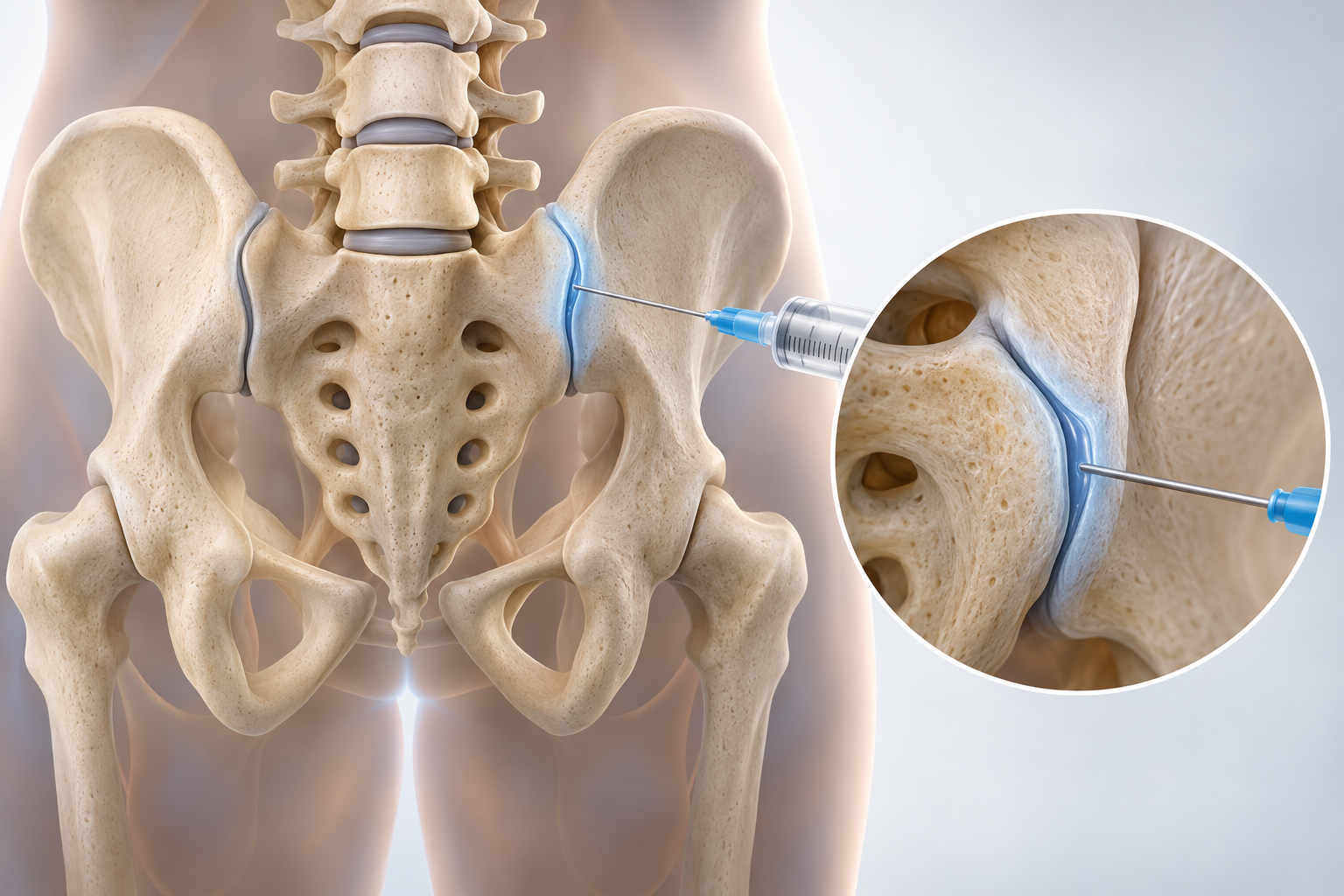
When we suspect that the sacroiliac (SI) joint is causing lower back, buttock, or pelvic pain, an injection can serve two very different purposes.
An SI joint injection may be used to:
Help confirm that the SI joint is actually the source of the pain, or
Treat inflammation and provide longer-lasting pain relief.
Understanding the difference between a diagnostic SI joint injection and a therapeutic SI joint injection is important because each procedure gives us different information and may represent a different step in your treatment plan.
What Is a Diagnostic SI Joint Injection?
A diagnostic SI joint injection is performed primarily to answer one question:
Is the SI joint actually causing your pain?
SI joint pain can be difficult to diagnose because it can feel very similar to pain coming from the lumbar spine, hip, facet joints, or surrounding muscles.
An MRI may also show abnormalities in the lumbar spine that are not necessarily responsible for the patient's symptoms.
That is why we do not want to simply treat what looks abnormal on an MRI.
We want to identify the actual pain generator.
During a diagnostic SI joint injection, a needle is carefully positioned into the SI joint using imaging guidance. A small amount of local anesthetic is then placed into the joint.
The anesthetic temporarily numbs the SI joint.
The important question becomes:
What happens to your usual pain after the joint is numb?
What Are We Looking for After a Diagnostic Injection?
We are looking for a significant temporary improvement in the pain you normally experience.
For example, before the injection you may have pain when:
Standing from a chair
Walking
Climbing stairs
Getting in or out of a car
Rolling over in bed
Standing on one leg
Bending or performing normal daily activities
After the injection, we may ask you to perform some of those same activities.
If your typical pain is substantially improved while the local anesthetic is working, that provides additional evidence that the SI joint is contributing significantly to your symptoms.
Short-Term Relief Can Still Be a Successful Test
One of the most important things to understand about a diagnostic injection is that the pain relief does not have to last for days or weeks for the injection to be useful.
The anesthetic is intentionally temporary.
If your pain improves significantly for the expected duration of the anesthetic and then returns, the injection may still have accomplished exactly what we wanted it to do:
It helped identify the source of your pain.
Why Is a Diagnostic Injection Important?
Before considering a more invasive treatment, we want as much evidence as possible that we are treating the correct structure.
The diagnosis of SI joint pain is typically based on several pieces of information, including:
Your history and description of the pain
The location of your symptoms
Physical examination
SI joint provocative maneuvers
Imaging when appropriate
Your response to a diagnostic SI joint injection
No single piece of this evaluation should necessarily be viewed in isolation.
Instead, we put the information together to determine how likely it is that the SI joint is the primary pain generator.
What Is a Therapeutic SI Joint Injection?
A therapeutic SI joint injection has a different goal.
Instead of simply determining whether the joint is painful, the goal is to reduce inflammation and provide meaningful pain relief.
A therapeutic injection may include a corticosteroid medication along with local anesthetic.
The local anesthetic may provide more immediate relief, while the corticosteroid is intended to decrease inflammation within and around the SI joint.
Steroid medication may take several days to reach its full effect.
What Is the Goal of a Therapeutic Injection?
The goal is not simply to make a pain score lower.
We are ultimately trying to improve function.
We want to know whether treatment allows you to:
Walk farther
Stand longer
Sleep more comfortably
Exercise
Participate more effectively in physical therapy
Perform household activities
Work with less discomfort
Get in and out of a vehicle more easily
Reduce the need for pain medication
Return to activities that pain has prevented you from doing
The amount and duration of relief from an SI joint injection can vary significantly from one patient to another.
For some patients, an injection may provide substantial and lasting improvement.
For others, the pain may eventually return.
That information can also help guide our next step.
Why Do We Sometimes Perform Both Diagnostic and Therapeutic Injections?
The easiest way to understand the difference is:
Diagnostic SI Joint Injection
Question: Is the SI joint causing my pain?
The primary goal is to temporarily numb the joint and determine whether your normal pain substantially improves.
Therapeutic SI Joint Injection
Question: Can treating inflammation in the SI joint provide longer-lasting relief?
The goal is to reduce symptoms and improve function for a longer period of time.
These procedures can therefore provide different but complementary information.
What Happens if an SI Joint Injection Works but the Pain Comes Back?
A successful injection does not automatically mean that you need surgery.
Treatment remains individualized.
Depending on your symptoms and response to treatment, the next step may include:
Continued observation
Activity modification
Physical therapy
Core and pelvic stabilization exercises
Anti-inflammatory medication when medically appropriate
Additional therapeutic treatment
Other interventional procedures
Evaluation for SI joint fusion in appropriately selected patients
For patients with persistent, disabling SI joint pain despite appropriate conservative treatment, a strong response to diagnostic SI joint injection may become an important part of determining whether minimally invasive SI joint fusionshould be considered.
Why Not Just Treat What We See on the MRI?
This is one of the most important concepts in treating back pain.
An MRI may show:
Disc degeneration
Disc bulges
Facet arthritis
Spinal stenosis
Previous surgical changes
But seeing an abnormality does not necessarily mean that abnormality is causing the patient's pain.
The same patient may also have a painful SI joint.
That is why injections can sometimes be so useful.
Instead of guessing based solely on an image, a diagnostic injection allows us to test a suspected source of pain.
At Molina Spine, our goal is not simply to treat the MRI.
Our goal is to identify the structure actually producing your symptoms and then choose the least invasive treatment that is likely to help you.
SI Joint Pain Evaluation at Molina Spine
If you have persistent lower back, buttock, or pelvic pain—particularly if previous treatment directed at the lumbar spine has not relieved your symptoms—the SI joint may be worth evaluating.
A careful history, physical examination, provocative testing, imaging when appropriate, and diagnostic SI joint injection can help determine whether the SI joint is contributing to your pain.
Domingo Molina IV, MD, FAAOS
Orthopaedic Spine Surgeon
MolinaSpine.com
This information is provided for general educational purposes and is not intended to replace an individual medical evaluation. Treatment recommendations vary depending on each patient's symptoms, examination, imaging, medical history, and response to previous treatment.